
Dallas Housing Market – February 2026: More Listings, Softer Prices, and a Market That Rewards Discipline
February did not bring a dramatic shift to the Dallas housing market. Instead, it reinforced a pattern we have been seeing for roughly the past year: more inventory, slower sales, and modestly softer prices.
In other words, the buyer-friendly environment that emerged in 2025 is still very much in place.
Across the Dallas–Fort Worth metro, listings continued to climb. Inventory rose again year over year, giving buyers more options and more leverage when negotiating. Homes are also taking longer to sell. Days on market across the region have been hovering in the 60-day range for about a year now, a clear sign that the hyper-competitive seller’s market of the early 2020s has faded.
Prices are adjusting gradually to this new reality. February data shows the median home price in North Texas slipping modestly compared with last year. Realtor.com reported the Dallas-Fort Worth median list price around $411,000, down about 1.2 percent year over year, while Zillow data shows typical home values in Dallas down roughly 3.6 percent.
These are not large declines, but they confirm a steady cooling trend that has been underway since mid-2025.
Part of this shift comes from simple supply and demand. Texas has seen a surge in listings as homeowners adapt to the higher-interest-rate environment. Many people who delayed selling during the pandemic rate shock are now moving forward with life decisions like job changes, relocations, or growing families. The result is a more normal level of housing turnover.
With more homes available, buyers are able to compare properties, negotiate on price, and request concessions that were almost impossible to secure during the peak seller’s market. Sellers, meanwhile, are learning that pricing correctly from the beginning matters again.
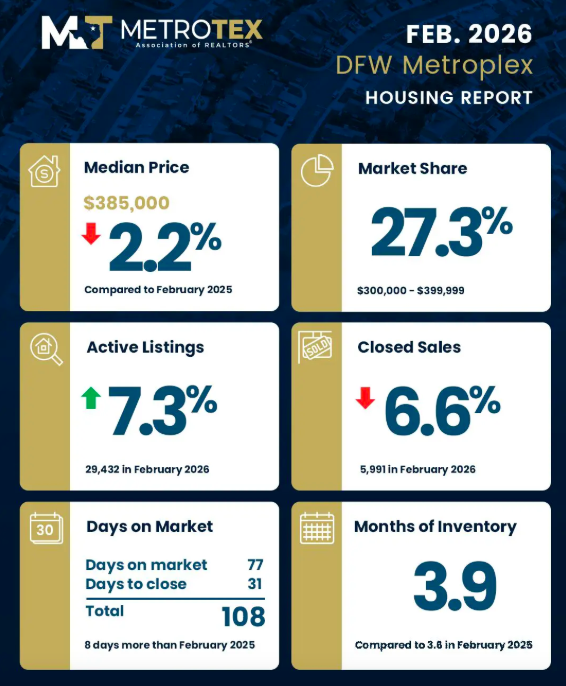
Source: MetroTex Feb-2026 Market Report
For investors, the story is a bit more nuanced.
On one hand, softer prices and longer marketing times can create better entry opportunities. On the other, demand has cooled as higher mortgage rates continue to limit affordability for many buyers. Even after improving slightly, mortgage rates remain well above the levels seen before 2022, which keeps monthly payments elevated.
The national picture reflects similar trends. Inventory across the United States has been rising for more than two years, particularly in the South and West. February saw active listings increase again year over year while median list prices edged down slightly. Homes are also taking longer to sell nationwide, a sign that the market is settling into a slower but potentially more balanced rhythm.
There is also a broader economic backdrop that investors are watching closely. Rising geopolitical tensions and volatility in global energy markets could create new inflation pressures, which in turn may affect mortgage rates and consumer confidence. Large purchases like homes are often the first thing people delay when economic uncertainty increases.
Still, the core fundamentals of the Dallas market remain strong. The metro continues to benefit from population growth, job creation, and a relatively affordable cost of living compared with many coastal markets. These long-term factors continue to support housing demand even as the market cools in the short term.
For investors focused on long-term rental properties, this environment can actually be healthy. A market with more inventory and less urgency allows disciplined buyers to evaluate deals carefully rather than competing in bidding wars.
February’s data does not signal a dramatic downturn in Dallas real estate. Instead, it shows a market continuing its transition toward balance. Buyers have more leverage than they did a few years ago, sellers need to price more realistically, and investors who stay patient may find better opportunities than the market offered during the boom years.